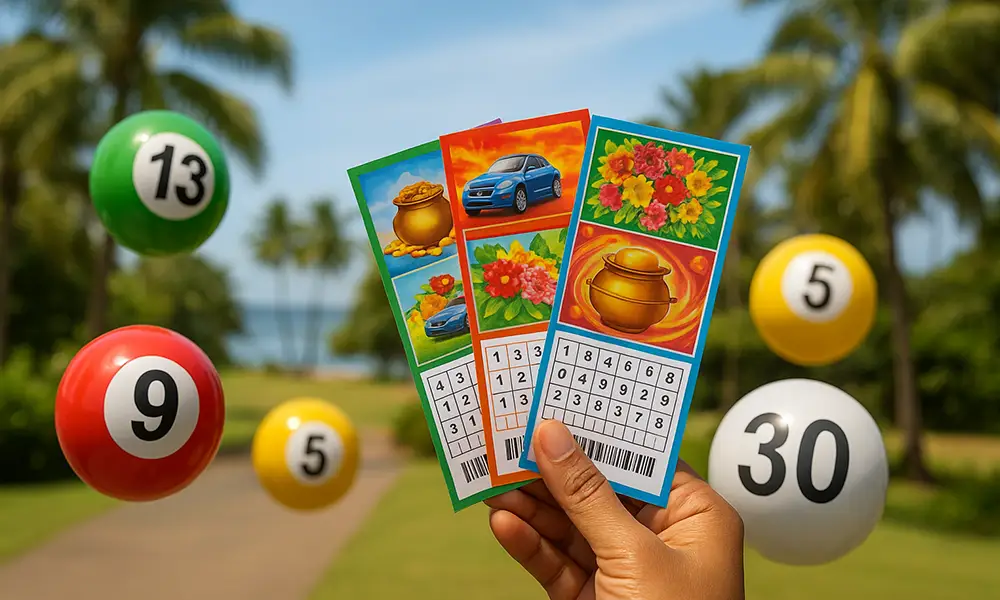
The lottery has long been one of humanity’s most enduring and captivating forms of gambling, blending simplicity, hope, and chance into an alluring game that transcends cultures and generations. Whether it’s the excitement of selecting numbers in a national draw or the instant gratification of scratch cards, the lottery’s appeal remains undiminished. This article delves into the core mechanics of lottery systems, their historical evolution, and the reasons behind their lasting popularity—offering a comprehensive, thoughtful look at a game based on pure probability and collective anticipation.
Understanding the Lottery System: The Basics of Chance
At its simplest, a lottery involves purchasing a ticket with a selection of numbers, hoping those numbers will match those drawn randomly during the lottery event.
How Lottery Machines Work
Modern lotteries depend on highly sophisticated systems designed to guarantee fairness and unpredictability:
-
Random Number Generators (RNGs): Digital algorithms create unpredictable sequences of numbers. RNGs are the heart of computerized draws, ensuring outcomes are unbiased and cannot be manipulated.
-
Mechanical Draws: Traditional systems use gravity-driven or air-mix ball machines where numbered balls are randomly mixed and drawn, often televised to assure transparency.
-
Ticket Validation and Security: Advanced digital scanning and cryptographic techniques validate tickets and prevent fraud, ensuring trust in the system.
These mechanisms work harmoniously to give every participant an equal shot at winning.
How the Mathematics of Lottery Works
Lottery odds are calculated using the principles of combinatorics, reflecting the probability of matching the drawn numbers:
-
In a typical 6/49 lottery, where players pick six numbers from 1 to 49, the odds of matching all six numbers are approximately 1 in 13,983,816.
-
These odds come from the mathematical combination formula $$ \binom{n}{k} = \frac{n!}{k! (n-k)!} $$, where n is the total numbers available and k is the numbers chosen.
-
Winnings for matching fewer numbers usually exist, with decreasing odds but smaller payouts, encouraging participation by offering multiple prize tiers.
Understanding these odds contextualizes the lottery as a game dominated by luck but framed by clear probabilities.
Historical Roots and Evolution of Lottery
Lotteries have a history stretching back thousands of years:
-
Ancient China reportedly used keno-like games to fund projects like the Great Wall.
-
Roman emperors ran lotteries to finance public works while entertaining citizens.
-
European nations in the Middle Ages used lotteries to raise funds for exploration, military, and social programs.
-
Modern government lotteries began in the 20th century as legitimate revenue streams supporting education and public welfare programs.
This evolution underscores the lottery’s social and economic significance beyond entertainment.
Modern Lottery Formats
-
Draw Lotteries: Traditional draws happen at scheduled times, often broadcast live.
-
Instant Win Games: Scratch cards and online instant games offer immediate results.
-
Multi-State Lotteries: Games like Powerball and Mega Millions pool tickets across states to create massive jackpots.
-
Online Lotteries: Digital platforms enable global participation with ease and transparency.
Variety keeps the lottery relevant and accessible.
The Allure: Why People Are Drawn to Lotteries
-
Accessibility: Low-cost tickets enable widespread participation.
-
Dreams of Wealth: Jackpots inspire hope for life-changing fortune.
-
Social Phenomenon: Shared anticipation and communal excitement at draws build a cultural event.
-
Contribution to Good Causes: Many lotteries fund education, health, and infrastructure, blending entertainment with social good.
Responsible Participation in the Lottery
-
Treat the lottery as entertainment, not an investment strategy.
-
Be mindful of odds and avoid chasing losses.
-
Set spending limits and view ticket purchases as donations to goodwill causes.
-
Use reputable and licensed lottery providers for security.
Conclusion: Lottery as a Celebration of Chance and Hope
The lottery remains a uniquely compelling game—simple to play, profound in its promise, and deeply woven into the fabric of societies worldwide. With transparent systems designed for fairness and security, it offers a moment of collective hope where dreams of fortune mingle with the mathematics of probability.
Every ticket embodies the human desire to dream big here and now, a ritual of chance that invites millions to participate in a timeless celebration of possibility and anticipation.