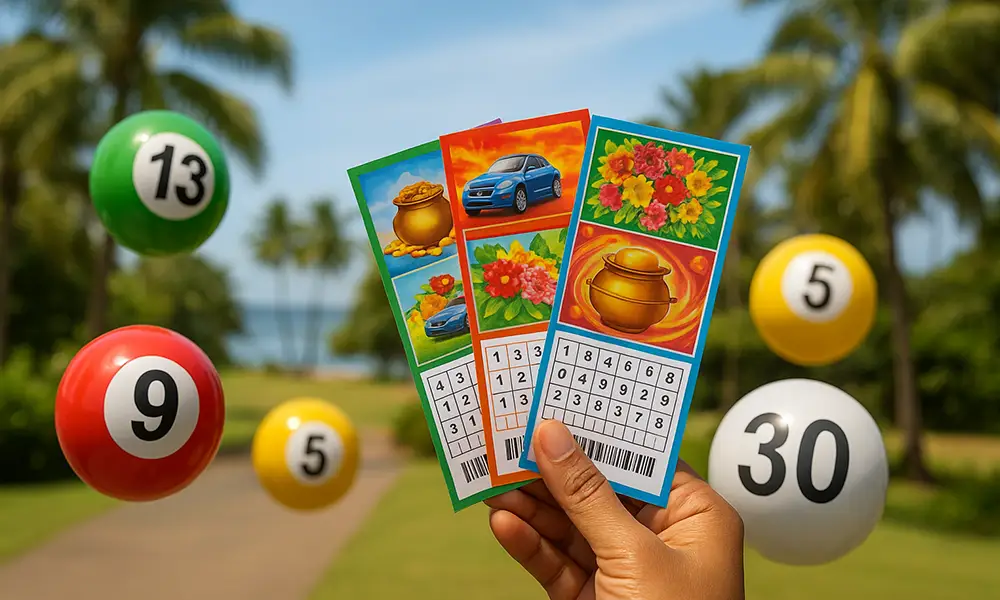
The lottery stands among the most intriguing and enduring forms of gambling worldwide, captivating millions with the promise of fortune and the allure of chance. Its elegant simplicity belies a complex system combining history, probability, and modern technology. This article provides a comprehensive yet accessible exploration of how lotteries work, their historical development, the mathematics behind them, and their societal significance.
The Mechanics Behind Lottery Systems
At first glance, the lottery appears straightforward: players select a set of numbers, and a draw reveals winning numbers, with prizes awarded to matching tickets. Underneath this simplicity, however, lies a highly engineered system designed to ensure fairness, randomness, and transparency.
Randomness and Drawing Methods
-
Mechanical Drawing Machines: These are traditional devices where numbered balls are mixed and drawn randomly. This process is often broadcast or publicly observed to promote trust.
-
Random Number Generators (RNGs): In computerized lotteries, RNG algorithms create unpredictable and unbiased sequences, often verified by independent audits to maintain fairness.
These methods are meticulously tested to avoid any predictability or tampering, underpinning the integrity of the lottery.
Ticket Validation and Payout
Modern lotteries employ sophisticated ticket validation systems using barcodes, QR codes, or digital verification, preventing fraud and simplifying prize claims. The payout determination considers how many winners exist, distributing the prize pool accordingly, sometimes with fixed odds or pari-mutuel systems.
The Mathematics of Lottery: Combinations and Probability
Lottery odds hinge on combinatorial mathematics. Consider the popular “6/49” lottery:
-
Players choose 6 numbers out of 49.
-
The total number of unique combinations is $$ {49 \choose 6} = 13,983,816 $$.
-
Hence, the probability of matching all six numbers exactly is 1 in nearly 14 million.
This calculation demonstrates the extremely low chance of winning the jackpot, emphasizing the lottery’s nature as a game of chance.
The formula for combinations is:
(nk)=n!k!(n−k)!{n \choose k} = \frac{n!}{k!(n-k)!}
where nn is the pool of numbers and kk the numbers chosen.
A Brief History of Lotteries
Lotteries have ancient origins:
-
Ancient China: Records suggest keno-like lotteries existed around 200 BC, funding major public works including portions of the Great Wall.
-
Roman Empire: Lotteries served to finance public buildings and entertain citizens during feasts.
-
Europe: By the Middle Ages, lotteries were common fundraising tools for towns, infrastructure, and charity welfare.
The modern lottery concept as a state-run revenue mechanism began taking root in the 19th and 20th centuries, alongside innovations in draw technologies and regulations.
Variants and Formats of Lotteries Today
-
Traditional Draw Lotteries: Scheduled draws selecting winning numbers from a predefined pool.
-
Instant Win Games: Scratch-off tickets or instant results offering immediate prizes.
-
Multi-Jurisdictional Lotteries: Collaborative games like Powerball pool participants globally, creating enormous jackpots.
-
Online Lotteries: Digitally accessible, these platforms modernize ticket purchases and offer interactive gameplay.
Why Lotteries Endure in Popularity
-
Affordability and Accessibility: Low-cost tickets allow wide participation.
-
The Dream of Life-Changing Wins: Huge jackpots inspire hope and enthusiasm.
-
Social and Cultural Events: The spectacle of drawings creates communal excitement.
-
Support for Public Causes: Many lotteries fund education, healthcare, and social programs, lending social legitimacy.
Responsible Play and Perspective
While lotteries provide entertainment, they should be approached with realistic expectations:
-
View the lottery as fun, not a reliable financial plan.
-
Set and adhere to personal spending limits.
-
Participate through licensed and regulated organizations.
-
Understand the low probability of jackpots and prize tiers.
Conclusion: The Timeless Allure of Chance and Hope
The lottery blends history, probability, and societal impact into a uniquely captivating game—a modern ritual of chance where millions partake in shared anticipation and dreams of fortune. Through advancing technology and evolving formats, lotteries maintain their role as beacons of possibility and communal connection. Every ticket purchased is more than just a gamble; it’s a celebration of human hope dancing with the unpredictable rhythm of chance.